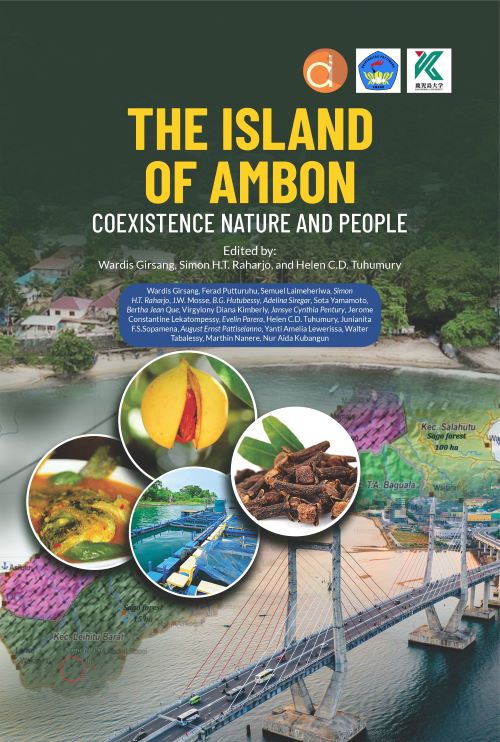
E-Book The Island Of Ambon Coexistence Nature And People
Unlike continental regions, small islands are small in physical size but have big problems regarding sustainable sociocultural, economic, and ecological development. Small islands face unsustainable challenges due to several factors, including isolation, limited basic infrastructure and connectivity within and between islands, small economic scale, geographical poverty trap, unequal population distribution, high logistic costs, vulnerability to climate change and natural disasters, limited resources, and sensitive to social conflicts. Future challenges include global warming, rising sea levels, and rising temperatures and their impact on coastal communities.
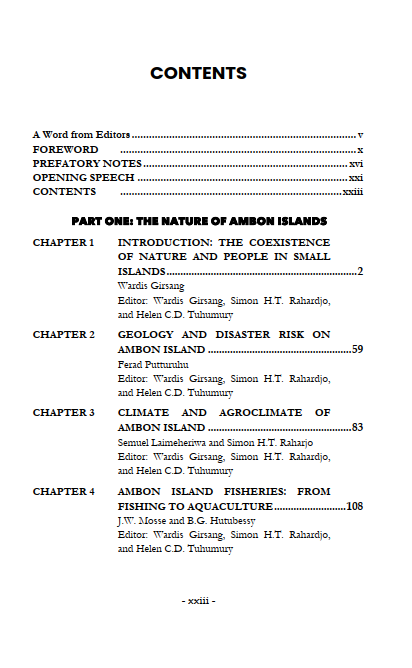
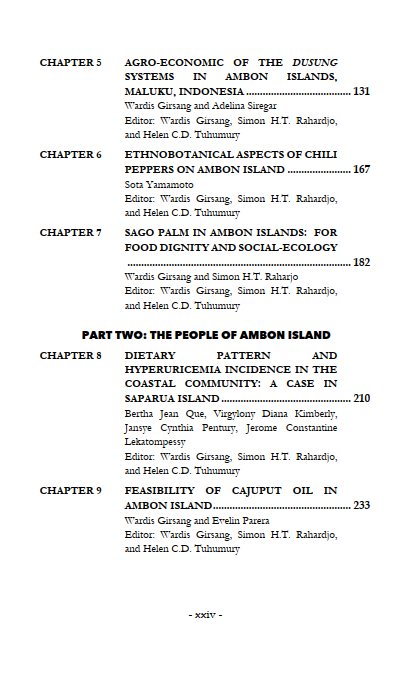
Because small islands have big issues, complex and dynamic problems, and location-specific, unique social, cultural, and economic, a multidisciplinary approach is necessary to understand the sustainable and balanced coexistence of nature and people in small islands. This book focuses on depicting Ambon Island from a different perspective. These multi-lenses include geology, climate, fisheries, ethnobotany, coastal community medicine, social economics, food science, gender, law, and history. Ambon Island’s size is about 743 square km. Ambon City was well known as a spice island. It has high population density, the Center of Center regional development, high economic growth, and a low poverty rate, but it faces ecological problems. This book will enrich the small island references about Maluku islands. We hope teachers, students, lecturers, policymakers, and professionals read and benefit from this book on developing creativity and innovation to create sustainable Ambon Island.
E-Book The Island Of Ambon Coexistence Nature And People ini diterbitkan oleh Penerbit Deepublish Digital